


How Much Does a Mural Cost? (2026 Professional Pricing Guide)

One of the most common questions we receive at Maxfield Bala Creative is:
"How much does a mural cost?"
The honest answer is that there is no universal price for a mural.
A mural is not a commodity. Every project is unique. The final cost depends on factors such as size, design complexity, wall conditions, access requirements, materials, scheduling, and the level of professionalism required to successfully execute the project.
While many online articles attempt to provide a single national average, professional mural pricing can vary dramatically depending on the project requirements. A simple geometric mural and a highly detailed photorealistic mural of the same size may require vastly different amounts of labor, planning, and artistic expertise.
This guide explains how professional mural pricing works and what property owners, developers, marketing agencies, shopping centers, and business owners should realistically expect when budgeting for a mural project.
Our Commercial Mural Pricing Guide
Our square footage pricing guide serves as a useful starting point for preliminary budgeting.
Mural Pricing by Size
Size | Estimated Price Range |
0-20 SF | $2,000-$500+ per SF |
21-100 SF | $375-$225+ per SF |
101-250 SF | $200-$100+ per SF |
251-500 SF | $90-$75+ per SF |
500-1,500 SF | $60-$45+ per SF |
2,500+ SF | Custom Pricing |
Important: These figures are intended for budgeting purposes only. Actual project pricing may vary based on design complexity, wall conditions, accessibility, travel, permitting requirements, scheduling constraints, and project-specific goals.
Why Mural Pricing Isn't Just About Square Footage
Many people assume mural pricing works the same way as flooring, painting a room, or installing drywall.
It doesn't.
Square footage is an important metric because it helps establish a starting point, but it is only one factor in determining the cost of a mural.
A common misconception is that larger murals are always more expensive than smaller murals.
In reality, complexity often matters just as much as size.
A simple 1,000-square-foot mural consisting of geometric shapes, bold typography, or large blocks of color may be significantly easier to execute than a 250-square-foot mural featuring photorealistic portraits, wildlife, detailed shading, intricate textures, or highly refined branding elements.
The amount of artistic skill, planning, and labor required can dramatically affect the overall project cost.

Mural Painting Is a Skilled Trade
One factor often overlooked when discussing mural pricing is the level of expertise required to execute professional mural work.
Mural painting combines:
Large-scale design and composition
Color theory
Material knowledge
Surface preparation
Layout and scaling techniques
Equipment operation
Problem-solving
Project management
Jobsite safety
Like any skilled trade, professional mural painting requires years of experience to master.
What clients are ultimately paying for is not simply the time spent applying paint to a wall, but the ability to consistently execute a high-quality result while minimizing risk, delays, and costly mistakes.
Factors That Affect Mural Cost
Design Complexity
Design complexity is one of the largest drivers of mural pricing.
Examples of lower-complexity murals include:
Geometric patterns
Simple graphics
Large typography
Flat color designs
Examples of higher-complexity murals include:
Photorealistic artwork
Portraits
Wildlife
Detailed landscapes
Multi-layered branded environments
The more detail, blending, precision, and artistic interpretation required, the more labor-intensive the project becomes.
Scale
Larger murals require more labor, more materials, and often more equipment.
However, larger murals also benefit from economies of scale, which is why square-foot pricing often decreases as project size increases.
Access Requirements
Access is one of the most commonly overlooked cost factors.
A mural may be straightforward to paint, but reaching the wall can significantly impact the budget.
Examples include:
Boom lifts
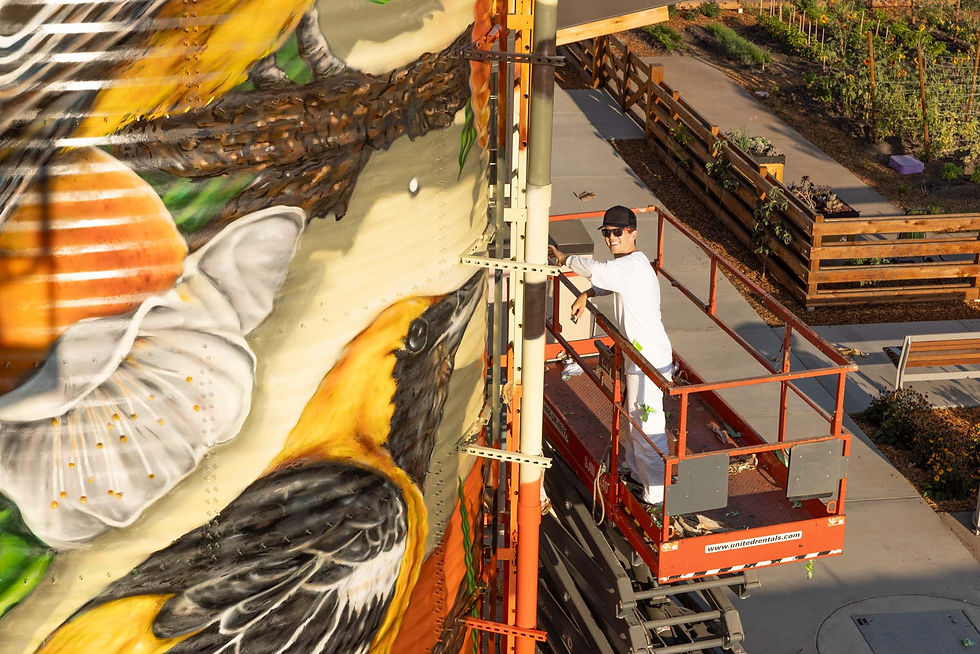
Scissor lifts
Scaffolding
Swing stages
Roof access
Traffic control
In some cases, access equipment can represent a significant portion of the project budget.
Surface Conditions
The condition of the wall plays a major role in determining project costs.
Common challenges include:
Cracked stucco
Peeling paint
Uneven surfaces
Water damage
Existing graphics
Extensive prep requirements
A wall that requires significant preparation will require additional labor before painting can begin.
Materials
Professional murals require more than paint.
Materials may include:
Exterior mural paints
Spray paints
Primers
Clear coats
Rollers
Brushes
Masking materials
Layout supplies
Surface preparation materials
Material quality directly impacts longevity and performance.
Scheduling and Logistics
Rush timelines, overnight work, limited access windows, and complex coordination requirements can all increase project costs.
Commercial projects often involve communication with:
Property managers
General contractors
Marketing teams
Architects
Municipal agencies
Brand representatives
Project management is often an important component of successful mural execution.

What Separates a $20,000 Mural from a $50,000 Mural?
Many clients assume the difference is simply size.
In reality, the difference often comes down to execution, professionalism, and project requirements.
Higher-budget mural projects frequently include:
More design development
Additional revisions
Brand-specific customization
Complex installations
Premium materials
Faster execution timelines
Larger production teams
Increased project coordination
Insurance requirements
Licensing requirements
Greater accountability
Professional mural agencies are often responsible for managing significant project risk while delivering a consistent result that aligns with a client's brand standards.

When a Mural May Not Be the Best Option
A mural is not always the right solution.
In some situations, alternative approaches may provide a better return on investment.
Examples include:
Temporary marketing campaigns where vinyl graphics may be more appropriate
Projects with budgets that do not align with the desired outcome
Situations where signage would better serve the business objective
Environments where artwork may need to change frequently
Clients should also carefully evaluate who they hire.
A mural is often a highly visible and long-lasting feature of a property. Experience, professionalism, insurance coverage, portfolio quality, and reliability should all be considered when selecting a mural artist or agency.
The Real Value of a Mural
The value of a mural extends beyond the paint itself.
Over the years, we've seen murals help create:
Increased foot traffic
Stronger brand identity
Destination experiences
Social media engagement
Community pride
Press coverage
Improved placemaking
Enhanced tenant experiences
More memorable customer interactions
The most successful murals become assets that continue creating value long after installation is complete.
Final Thoughts
If you're trying to budget for a mural, the best place to start is by identifying your goals.
Consider:
What do you want the mural to accomplish?
How large will it be?
How detailed will the artwork be?
What is the condition of the wall?
What access equipment will be required?
What timeline are you working with?
Once those questions are answered, a professional mural artist or agency can provide pricing that reflects the actual scope of the project.
While square footage provides a useful starting point, the most accurate pricing always comes from understanding the unique requirements of the project itself.
If you're considering a mural for your business, property, shopping center, office, or public space, contact Maxfield Bala Creative to discuss your project and receive a customized estimate.


Comments